
Even the most experienced pilots can stumble when the pressure is on.
At FLYY, we conduct a lot of flight reviews. One thing we’ve learned? Most pilots don’t fail because they lack the thumb-stick skills to fly well. They struggle because – as much as we try to minimize it – the review environment introduces some stress, and small habits that normally go unnoticed suddenly stand out.
The good news is that the issues we see most often are completely avoidable and most are procedural.
Here are the three most common mistakes that trip up pilots during a review and how to avoid them.
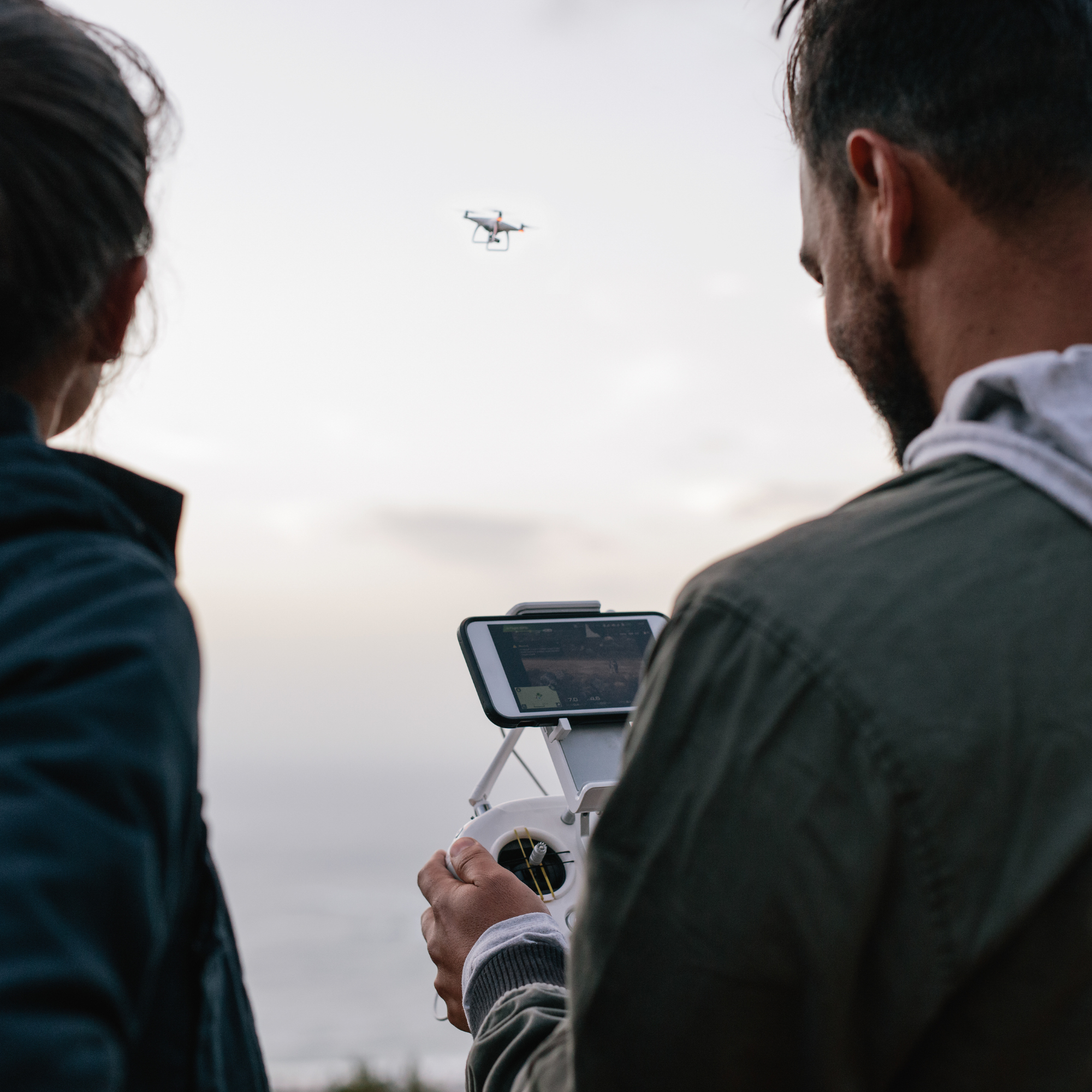
1. Tunnel Vision
When you go to a sports game, do you watch the players or the scoreboard?
The game of course! You’ll look at the scoreboard occasionally to confirm the time remaining, but your focus is mostly on the players.
Your Ground Control Station (GCS) is the scoreboard. The RPA is the game.
A common mistake we see is pilots staring at their screen while initiating movements. The screen is useful for confirming telemetry and camera perspective, but whenever VLOS/possible, it should never replace direct observation of the aircraft and the surrounding environment.
During a review, flight reviewers are looking for pilots who:
-
Maintain visual awareness of the aircraft
-
Confirm aircraft movement visually before relying on the screen
-
Use the GCS to verify information, not replace situational awareness
Good habit: Initiate movement while watching the aircraft, then confirm you’re getting what you expect on the screen.
2. Ignoring the Airspace Above
Many pilots scan left and right but forget to check for proximity of airspace above them.
When we ask a pilot where the nearest controlled airspace is, some immediately start describing nearby airports or lateral boundaries. But aviation is three-dimensional. Airspace classifications, traffic patterns, and operations above your altitude all matter.
If you’re only thinking laterally, you’re missing part of the picture.
During a review, we want to see pilots who can quickly answer questions like:
-
What airspace are you operating in?
-
Where is the nearest controlled airspace?
-
How would you get permission to operate there if needed?
Good habit: Before every flight, confirm both lateral and vertical airspace boundaries so you can confidently explain them if asked.
3. Lack of SOP Precision
This one is easier to spot than pilots might think.
We can often tell when a pilot created their normal and emergency procedures checklist for the review and who has practiced and is familiar with them from actual use.
A checklist isn’t just something you show a reviewer. It’s a tool you should be comfortable navigating under normal situations and ones with a bit more pressure. If you have to hunt for information during the review, it signals that the procedure isn’t part of your normal workflow.
Reviewers are looking for pilots who can:
-
Locate key information quickly
-
Demonstrate familiarity with using their SOP
-
Understand “the why” behind the checks that are mandatory
Good habit: Practice using your SOPs before the review. Know where the critical information is and how to access it quickly.
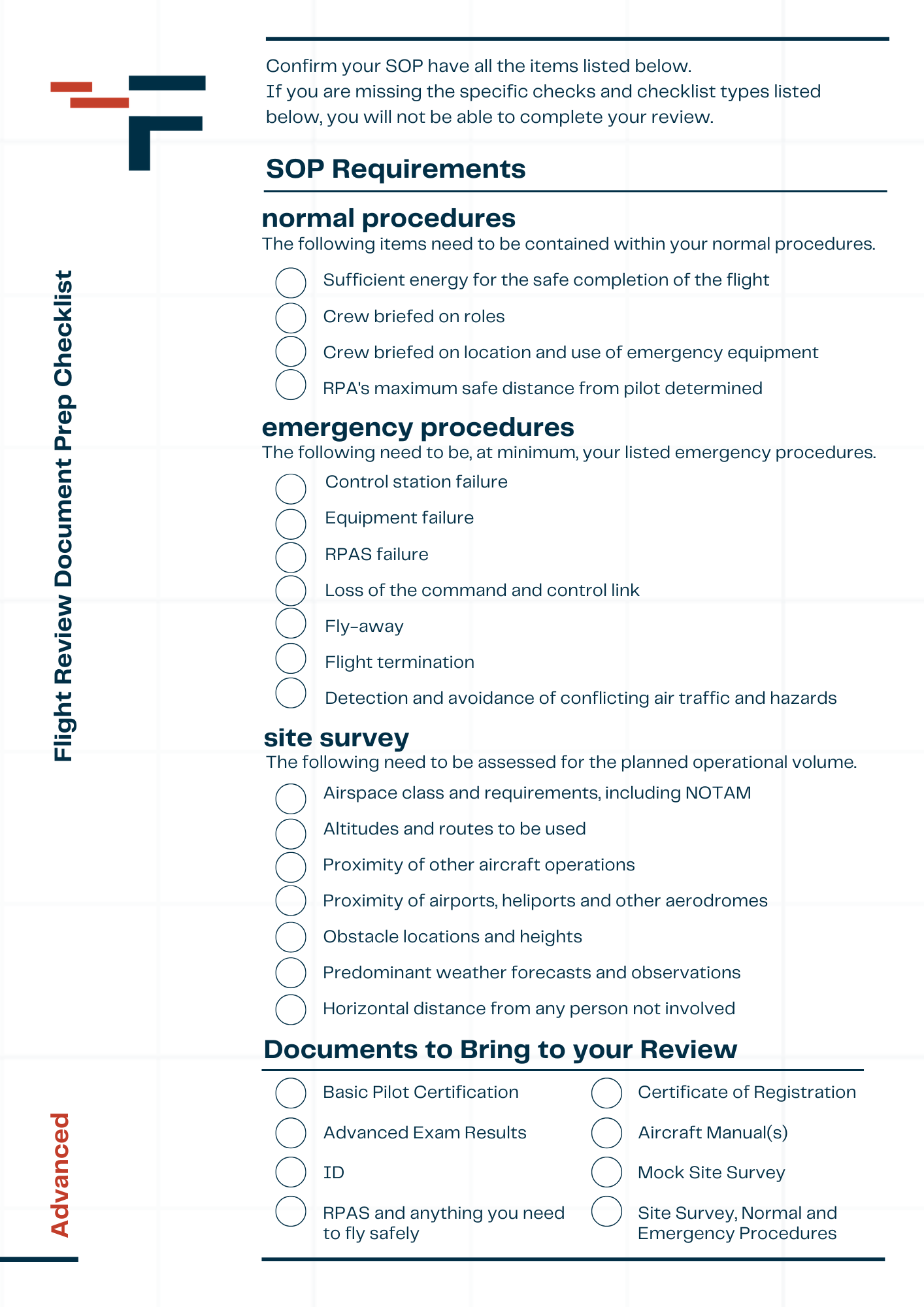
Our Flight Review Prep course provides candidates with, among other things, a checklist to ensure their SOP contain all the required items. Not fun to fail a review before you even get to fly because you’re missing a CARs-mandated item!