Whether you’re trialling out Sheltered operations under your Advanced certificate, completing a routine mapping mission, supporting emergency response, or flying BVLOS as part of a complex operation, one thing remains constant: the environment dictates your technique. Weather, terrain, airspace, crew dynamics, and mission purpose all shape how you prepare, fly, and debrief. Considering all the variables is a core skill for pilots working in increasingly more complex environments.
Here are practical ways to strengthen your adaptability across three mission phases: pre-flight, on-site, and post-mission.
Pre-Flight
Plan Like the Environment Is Your Co-Pilot
Assess Weather Constraints Early
Environmental adaptation starts long before you arrive on site. Pilots should analyse METARs/TAFs, NOTAMs, K-Index, and GNSS health with the specific terrain and mission type in mind. In BVLOS missions, this might mean interpolating between known weather stations on either side of your flight area. I’m writing this as the December chill as set in, so I’m thinking of cold-weather risks such as battery derating, icing potential, reduced sensor performance, visibility reductions, brittle plastics, and operator comfort/fatigue. Some of those are considerations in extreme heat too! You want to think of how extreme temps can affect your RPA, required systems, and also your crew!
BVLOS/EVLOS-Specific Pre-Flight Considerations
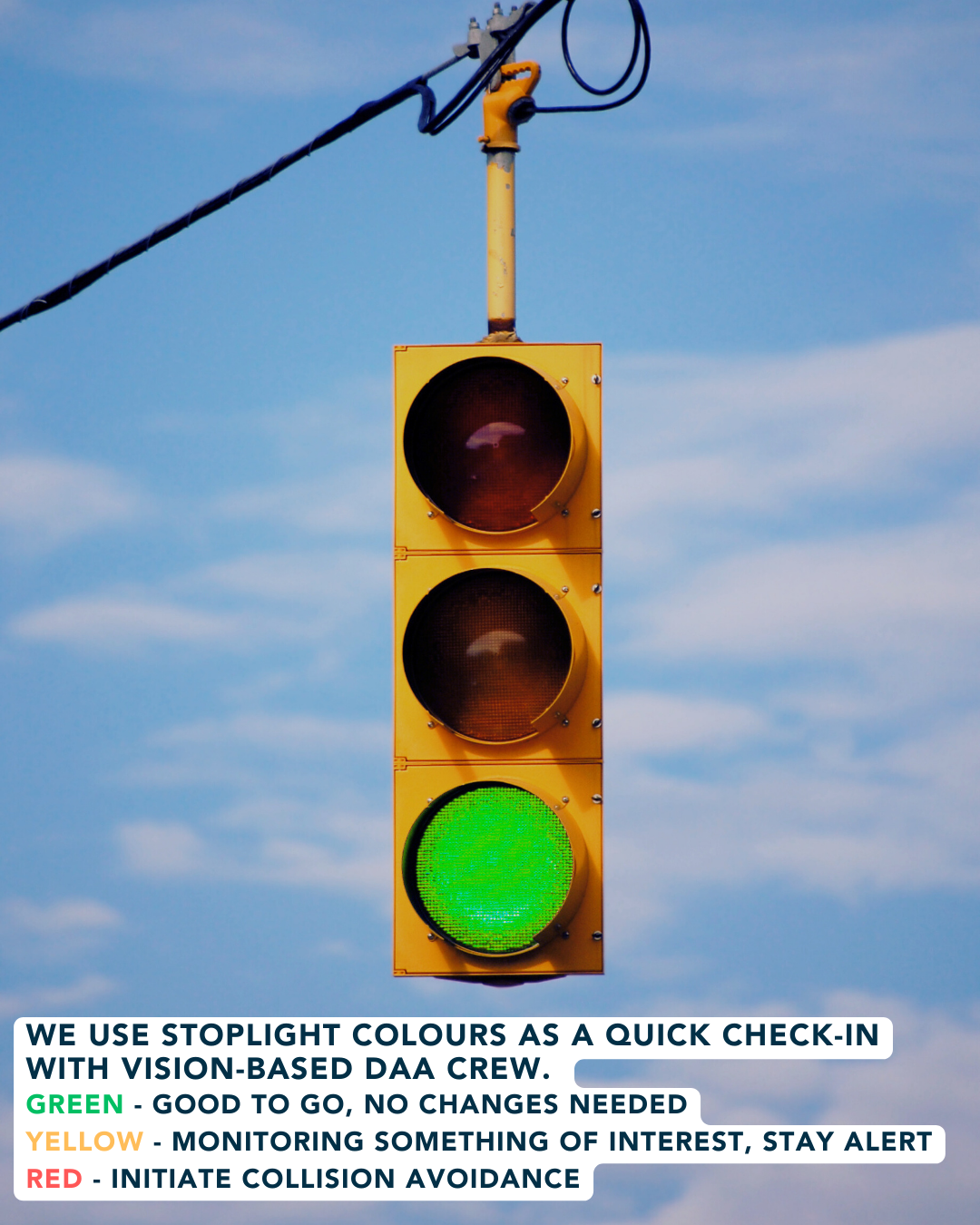
Operations where you will no longer have the drone in sight are a whole new ball game. Adaptation is heavily tied to Crew Resource Management (CRM). EVLOS requires a trained visual observer, and BVLOS can use VOs to provide the DAA functionality that’s required. It’s important to assign explicit roles (PIC, VO(s) or remote observers, payload operator, airspace monitor, mission commander), identify environmental-based threats to situational awareness such as glare, shadows, cluttered DAA system (radar/ADS-B return) environments, or expected traffic density, and clearly define off-nominal cues, uncertainty indicators, and environmental triggers for contingency actions. You’ll also want to map environmental pinch points such as terrain masking, urban canyon multipath risk, RF congestion, wildlife zones and microclimates.
A well-adapted pre-flight process anticipates the environment so you’re not finding fights all along the way.
On-Site
Translate Planning Into Real-Time Technique
Set Up for Success
Despite the best efforts of planning, every environment has quirks that will dictate how you set up your ground station, observers, and flight path. You might find you’re needing to adjust launch/landing zones based on wind, terrain, and thermal conditions, establish clear sightlines for observers or place remote observers where terrain or urban masking is less likely, and monitor cloud ceilings, wind layers, and temperature deviations as conditions evolve.
Cold-Weather Technique Adjustments
On site, cold-weather flying becomes a challenge when trying to stay tactile and operational. Aim to keep batteries warm until just before use and avoid placing the aircraft on snow or ice for lengthy pre-run checks. Expect everything to take just a little bit longer and crew patience to be just a little bit thinner – not a great combo. You’ll want to increase return-to-home margins due to accelerated voltage drop and protect ground equipment from condensation and frost to prevent controller fogging.
Adaptive BVLOS Technique in Dynamic Environments
BVLOS requires environmental situational awareness to be distributed across the team and to do that, you need effective communication. Leverage CRM intentionally by having observers call out traffic or environmental changes using standardized phraseology, and standardized intervals. This should also be a component of your crew’s training!
Validate detections using multiple sources such as visual observation, radar feed, ADS-B, and telemetry indications, whenever possible. Validate that your DAA’s effective range covers the entire planned flight area PLUS the required detection volume, and at a confidence level that matches the ARC risk ratio requirements once you’re on site. Terrain masking, visual obstructions and other real life conditions might reduce the confidence level below system manual specifications.
Post-Mission
Turn Challenges Into Lessons Learned through Debriefing
Reflect on how the forecasted versus actual missions compared. Which contingency triggers were discussed and which were used? Was cold-weather performance aligned with expectations? Did observers or remote team members encounter situational awareness barriers you hadn’t planned on? How can you amend procedures so you’re not constantly re-learning the same lessons?
Evaluate SOP clarity, workload distribution (especially where environmental factors like remoteness or high background noise increased burden), detection quality, and decision-making processes. Determine whether the crew identified and managed environmental threats effectively or if process changes need to be made before the next flight.
If done right, your debrief learnings will give you the ability to predict the future by enhancing your situational awareness. Your “been there/done that” level increases, and therefore your confidence and competence. The more intentional your debrief, the more adaptive your next operation becomes.
Data
Ensure environmental, operational, and technical logs are captured and stored to support seasonal trend analysis, building out your hazard registry, refinements to SOPs or operations manuals, and evidence packages if you think you might need to demonstrate Operational Safety Objectives compliance on a future High-Risk SFOC application.
Final Thoughts
Adapting your flight techniques for any environment is about anticipating the factors that shape air risk, ground risk, and mission success. Whether flying in cold temperatures, navigating complex airspace, or conducting BVLOS missions with a distributed crew, your preparedness and adaptability directly influence safety and performance. As you gain experience, you’ll find that your most valuable tool is the ability to continuously adjust how you plan, fly, and reflect.