
With the new privileges for EVLOS and Sheltered operations under advanced, plus the option to use a vision-based Detect and Avoid (DAA) system to meet the L1C BVLOS requirements, there is some nuance to when and where Visual Observers (VOs) are needed and what training they require.
How does your knowledge stack up? Test yourself with the following scenarios.
Do your best to make your guess before scrolling past the scenario photos to read the answer.
Scenario #1
A real estate agent is flying a small drone to capture aerial photos of a detached house in a quiet suburban neighborhood.
-
The pilot is standing in the driveway.
-
The drone is flying about 40 m away and 20 m above the house.
-
The drone remains clearly visible to the pilot at all times.
-
No people are nearby except the homeowner.

This operation falls under Basic Operations and does not require a VO.
-
No need for additional observers to maintain situational awareness. A pilot may operate alone if they can maintain visual line of sight and safely scan the airspace.
Scenario #2
A drone pilot is conducting an inspection of a building on a construction site downtown.
-
The pilot stands on the south side of the building
-
The drone flies around to the north side of the structure
-
Once behind the building, the pilot can no longer see the drone

This operation falls under Advanced Operations – Sheltered and does not require a VO.
- Or it could, if a couple conditions are in place
-
No need for additional observers to maintain situational awareness as the risk of an airspace incursion is low that close to structures
-
Crewed aircraft have bigger problems than your drone if they’re that close to a structure…
-
Scenario #3
An inbound vessel is reported to be leaking something. From her office HQ, a pilot launches the dock drone to get some advanced information before it arrives in the harbour.
-
The crew on-site are not supporting the drone operation
-
The drone launches and carries out the pilot’s programmed mission and returns to the dock

This operation falls under Level 1 Complex Operations and does not require a VO.
- Or it could, if a couple conditions are in place
-
While a Detect and Avoid (DAA) system is required to operate BVLOS, it doesn’t have to be provided by Visual Observers. At the time of writing, there aren’t many options aside from Vision-based DAA, but it could be done.
Scenario #4
Advanced RPAS Certified Line Workers are investigating erosion in a valley that runs parallel to their transmission lines.
-
The drone is flying up to 2500 m away and about 1000 m from the nearest line structure
-
The drone is visible at times, but only as a small dot in the sky
-
The crew have visibility to the airspace the drone is flying in, just not consistently the drone itself
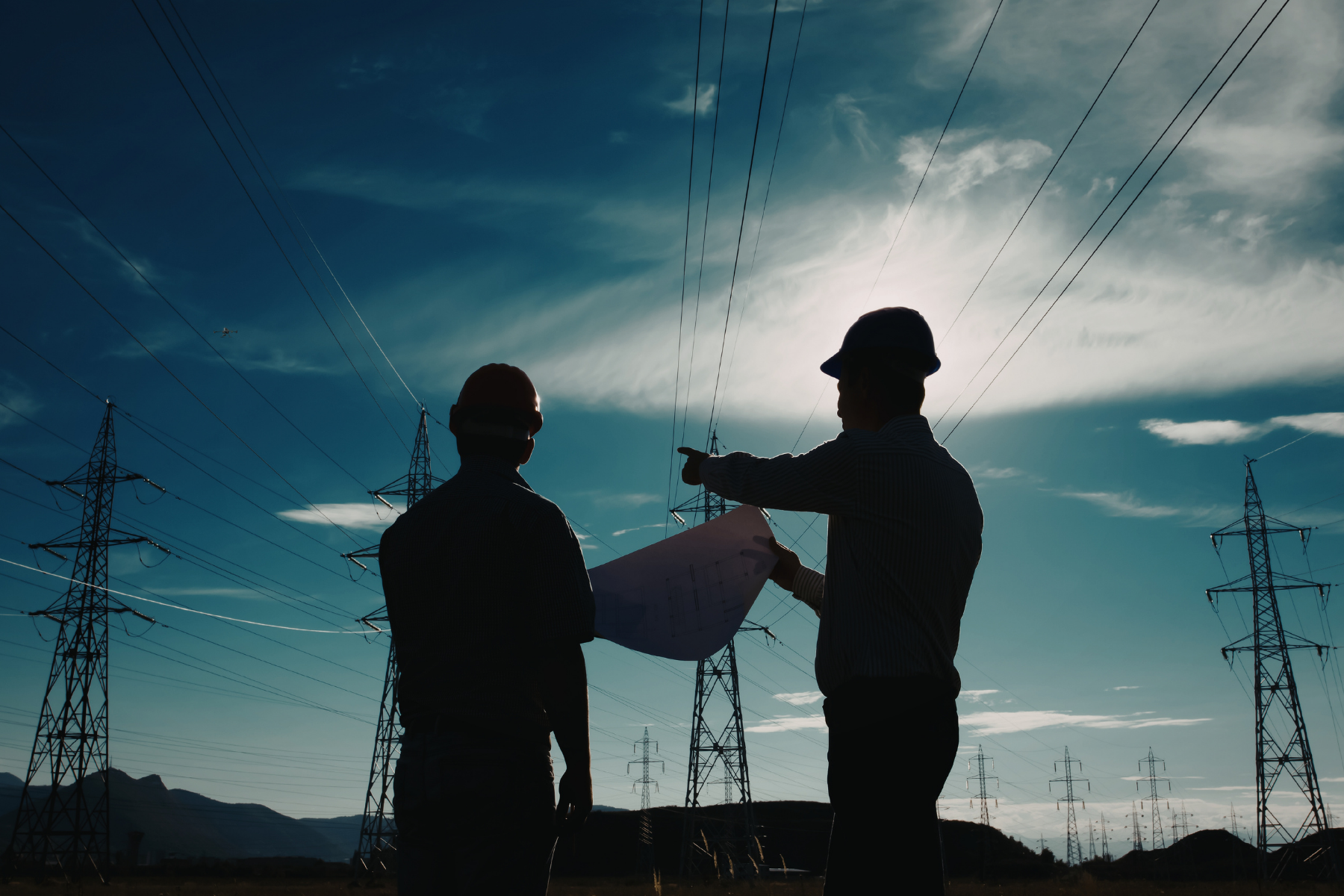
This operation falls under Advanced Operations – EVLOS and does require a VO.
- Providing a couple conditions are in place
-
The VO requires at least a Basic RPAS certification
How did you do? Did you get them all? Did you also spot the drones in each of the photos?
Challenge yourself by now thinking through each scenario if it was flown with a Medium drone.
Could you do it? What critical piece of information do you need to know?